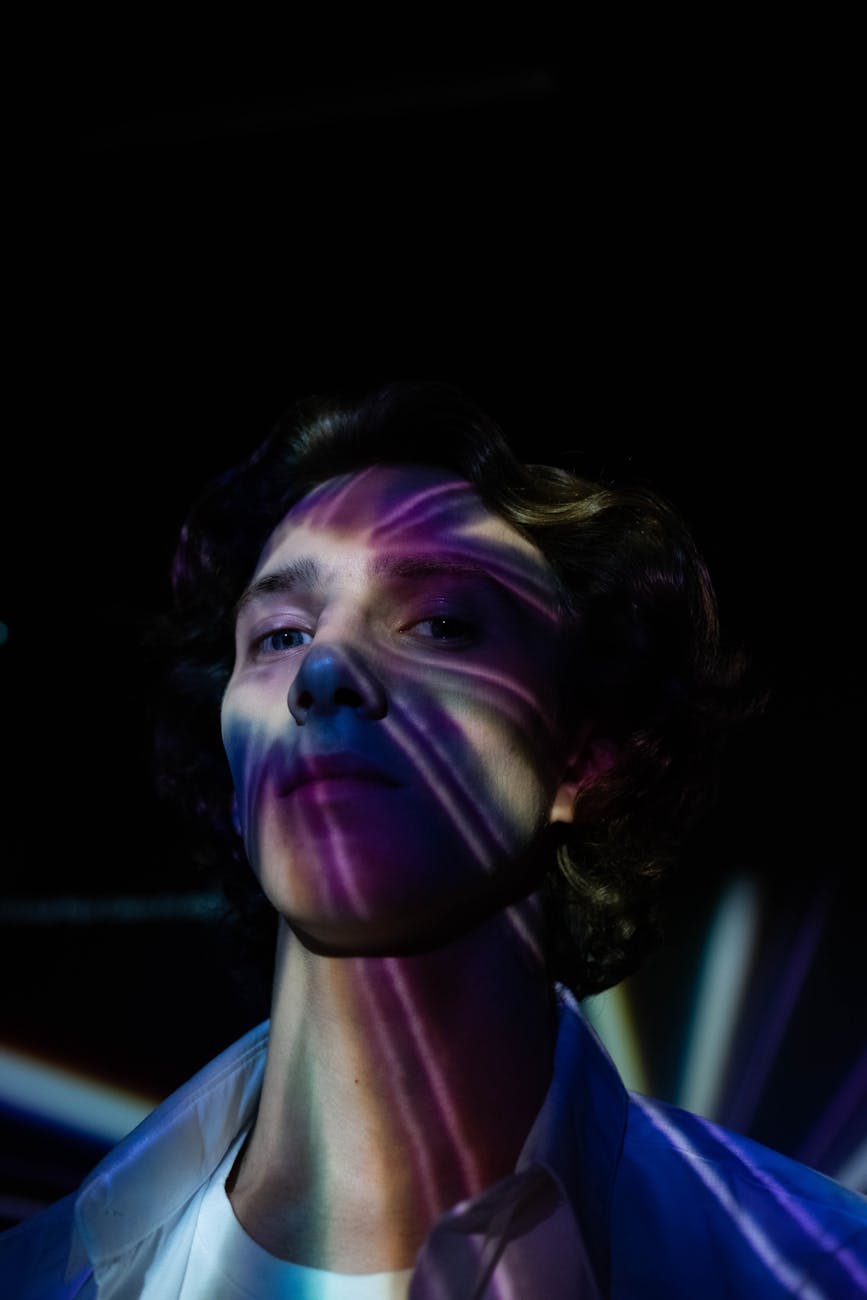
LSD (also called acid) taught me that what I think about matters. The visions you see while high on LSD are the intersection of where your thoughts become form- the moment when your perspective affects your physical reality.
Shrooms helped me process childhood trauma I’d forgotten about, floating memories to the surface about when I first felt the sting of being the odd one out, or when I decided my mother wasn’t a good mother to me.
My tips for people trying psychedelics for the first time:
- The amount of LSD you take for your first trip should fit on the tip of your finger- a single tab. Similarly, if you start with shrooms, start small.
- Trip in a familiar, beautiful, comfy space with people you trust completely and are never intimidated by. Tripping with people you have a weird, competitive dynamic with never goes well. Tripping in nature is also a good option, but designate a specific location, like your campsite, and make sure someone trustworthy knows where you are.
- If you get anxious during your trip, remind yourself that by 12 hours from now, it will completely end and life will resume, almost as if nothing happened. Also, remind yourself that you are allowed to curate your mind to be your own sanctuary- a safe resting place for your true identity. Know that other peoples’ opinions of you don’t matter that much in the grand scheme of things. Focus on what you can control- your attitude towards life. Try to react to challenges gracefully and with an open mind.
Good and Bad Reasons to Use Psychedelics
Good reasons:
-To break through stagnation and old patterns, and have a breakthrough about a problem within yourself that you’ve been struggling with
-To heal a broken heart (but know that this kind of trip will be necessarily heartbreaking)
-To experience something unique in this world out of sheer intellectual curiosity
Bad reasons:
-To gain superpowers or the ability to control other people
-Expecting that your whole life will change for the better if you use them
-To escape (or as a form of self-denial or self-harm.)
How to Boost Creativity Using Psychedelics
Classic psychedelics like LSD and psilocybin (the active compound in magic mushrooms) spark creativity and open-mindedness primarily by disrupting the brain’s standard organizational hierarchy. In a typical waking state, neural activity is heavily filtered by the Default Mode Network (DMN)—a collection of interconnected brain regions that acts as an executive conductor, managing self-reflection, routine habits, and the boundary between “self” and “other.” LSD and psilocybin bind directly to serotonin 5-HT2A receptors, which temporarily deactivates or quietens the DMN. Without this central filter enforcing rigid, established neural pathways, the brain enters a state of hyper-connectivity, allowing regions that rarely communicate to share information directly. This neurological cross-talk breaks down cognitive biases, alters spatial and sensory perception, and allows disparate ideas to fuse, generating the novel associations and flexible thinking central to creative breakthroughs.
To intentionally leverage this hyper-connected state for creative work, you can employ specific action- and thoughtform-based techniques that guide the direction of the experience. First, utilize structured priming with intentional anchors by deeply studying a creative bottleneck or design problem in the days leading up to the experience, then placing physical anchors—like a blank canvas, an instrument, or specific text outlines—directly in the physical environment to naturally draw focus once the DMN quiets. Second, practice divergent ideation mapping, an active thoughtform method where you consciously abandon the need for logic or linear structure, instead allowing thoughts to branch into free-associative clusters, capturing these fleeting connections via voice notes or rapid, unedited line drawings. Third, execute perceptual frame-shifting, a technique where you deliberately step out of your personal identity and mentally adopt the persona of an alternate archetype, author, or historical observer. This cognitive shift removes internal critics and performance anxiety, allowing you to analyze creative projects with complete detachment and fresh perspective.
Hope this helped you.
Xo
Jordan
For more philosophy, neopagan spirituality, and psychology, subscribe to my blog, A Tattered Spellbook.


 A Tattered Spellbook
Leave a comment